 ×
 ESHOPNEW800+ INGCO tools online · Offers on now · Collect from 64 pointsShop now →
Dense, hard-wearing concrete floors for warehouses, workshops, car parks and commercial buildings, floated and trowelled on the day of the pour. Plus traditional sand-cement screeds, bonded or floating, laid to level and falls.
Industrial and commercial slabs, power-floated and trowelled to a dense, closed surface that resists wear and dusting.
Sand-cement screeds, bonded to the slab or floating over insulation, laid to levels and falls.
Saw-cut joints and falls to drains planned before the pour, not improvised after it.
Ready for a direct wearing surface, sealer, resin or tiles, depending on the use of the floor.
A slab finished in July faces very different conditions from one finished in January. We plan pour times, curing compounds, covers and fogging around the weather, and on request monitor the evaporation rate and slab temperature live. See the Curing Monitor.
Choosing the concrete itself? Read C25/30 or C30/37: choosing concrete to EN 206.
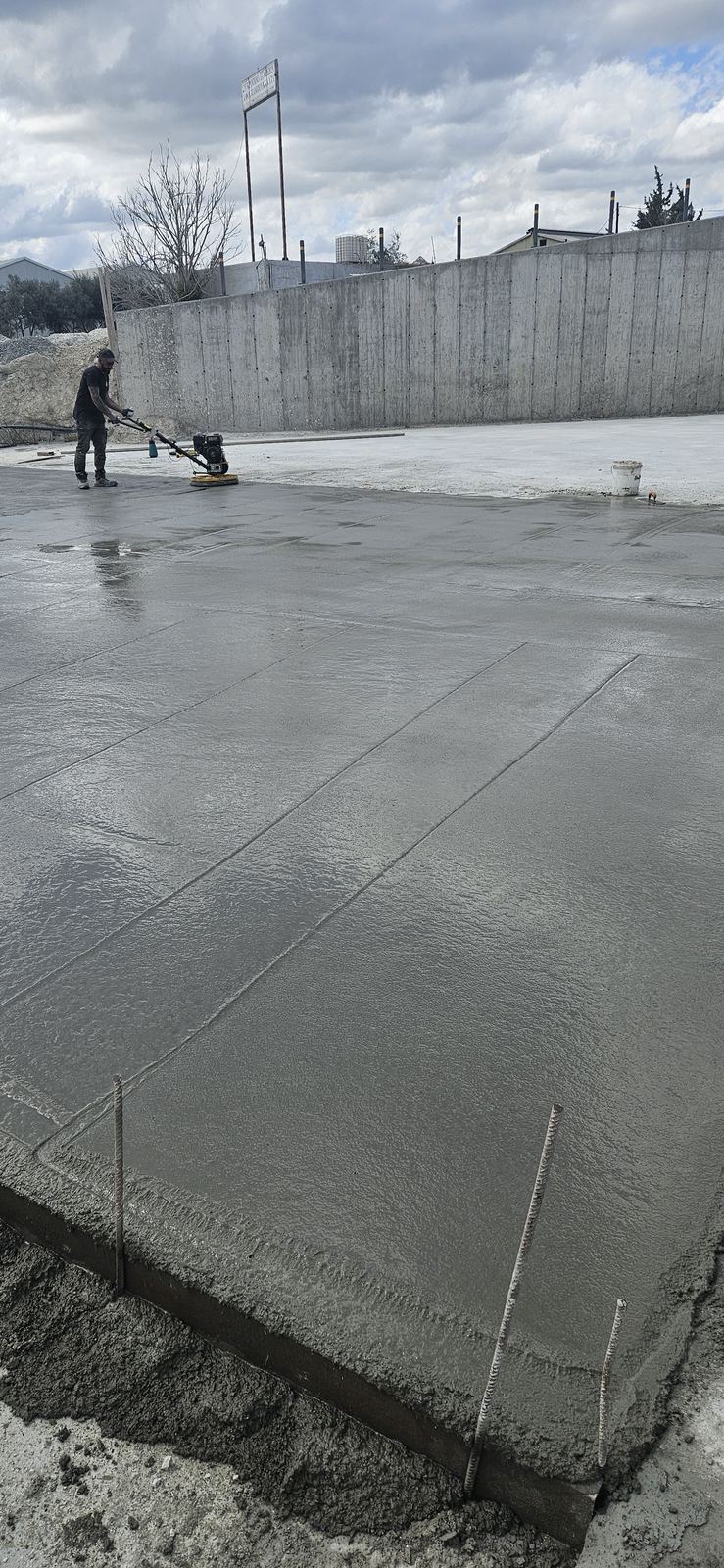
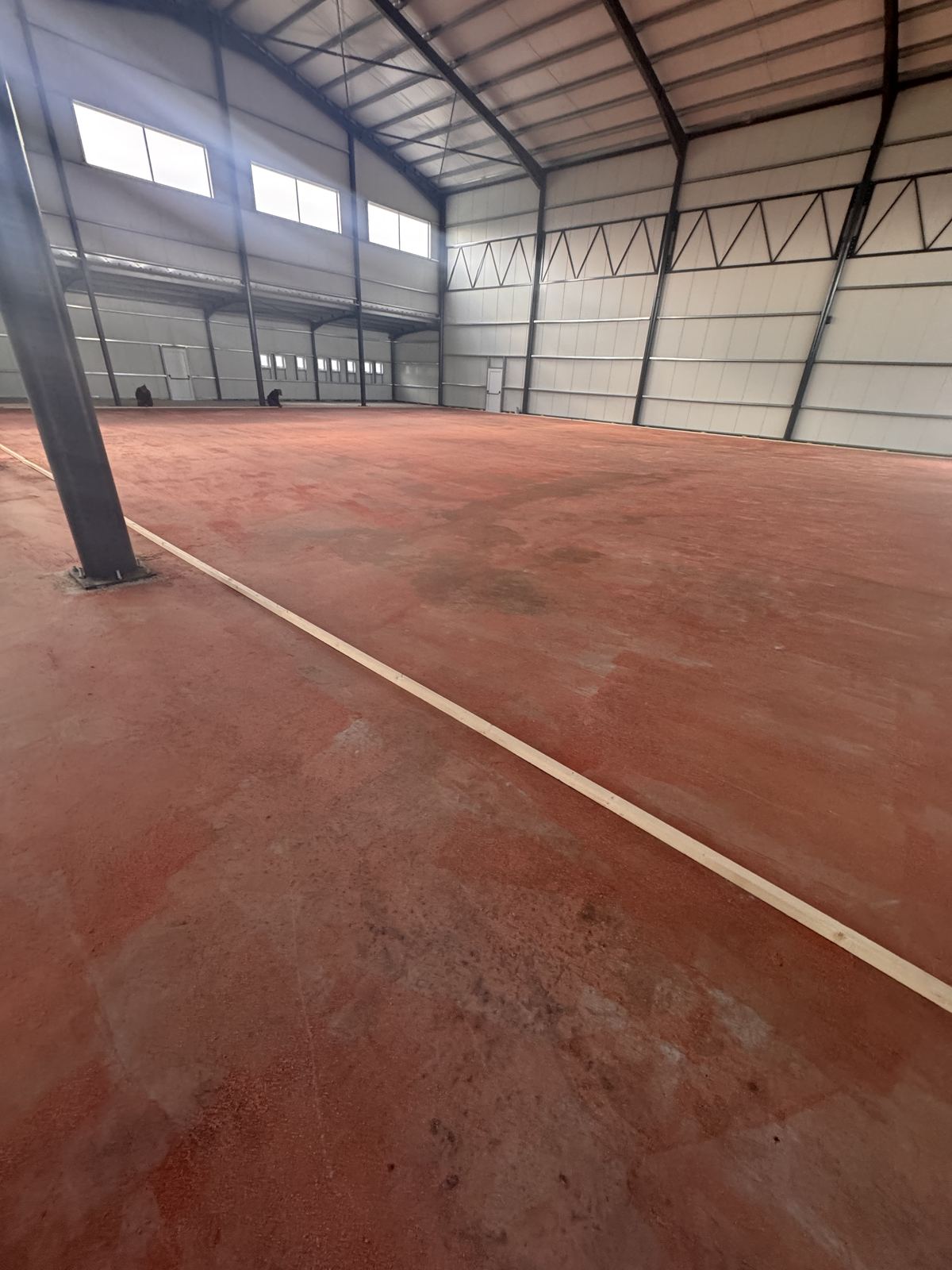
A concrete slab finished with ride-on or walk-behind power trowels while it sets. The machines float and then trowel the surface, giving a dense, flat, hard-wearing finish.
Warehouses, workshops, factories, car parks, showrooms and garages, and any floor that takes traffic or will receive a direct wearing finish.
Traditional sand-cement screeds suit falls, thicker sections and some floating build-ups. Self-levelling screeds are faster and flatter over large areas. We recommend the system after seeing the site. Compare with self-levelling screeds.
Correct concrete class, joint spacing, fibres where needed, timely saw-cutting and proper curing. Monitoring of temperature and evaporation is available on request.
Tell us about your project and we will visit, measure and send a clear written quote.