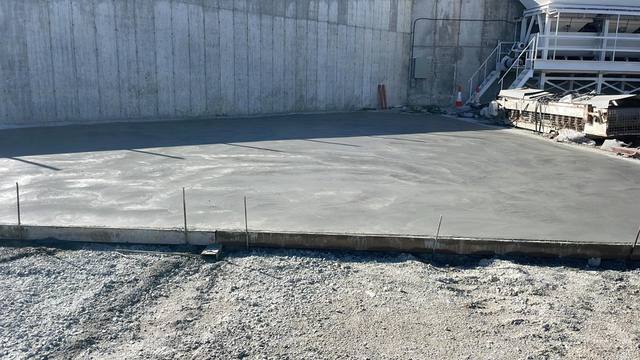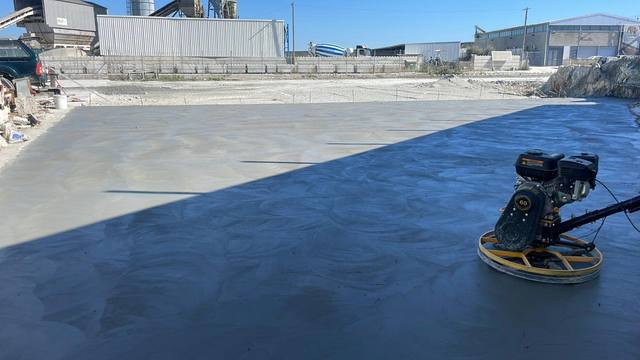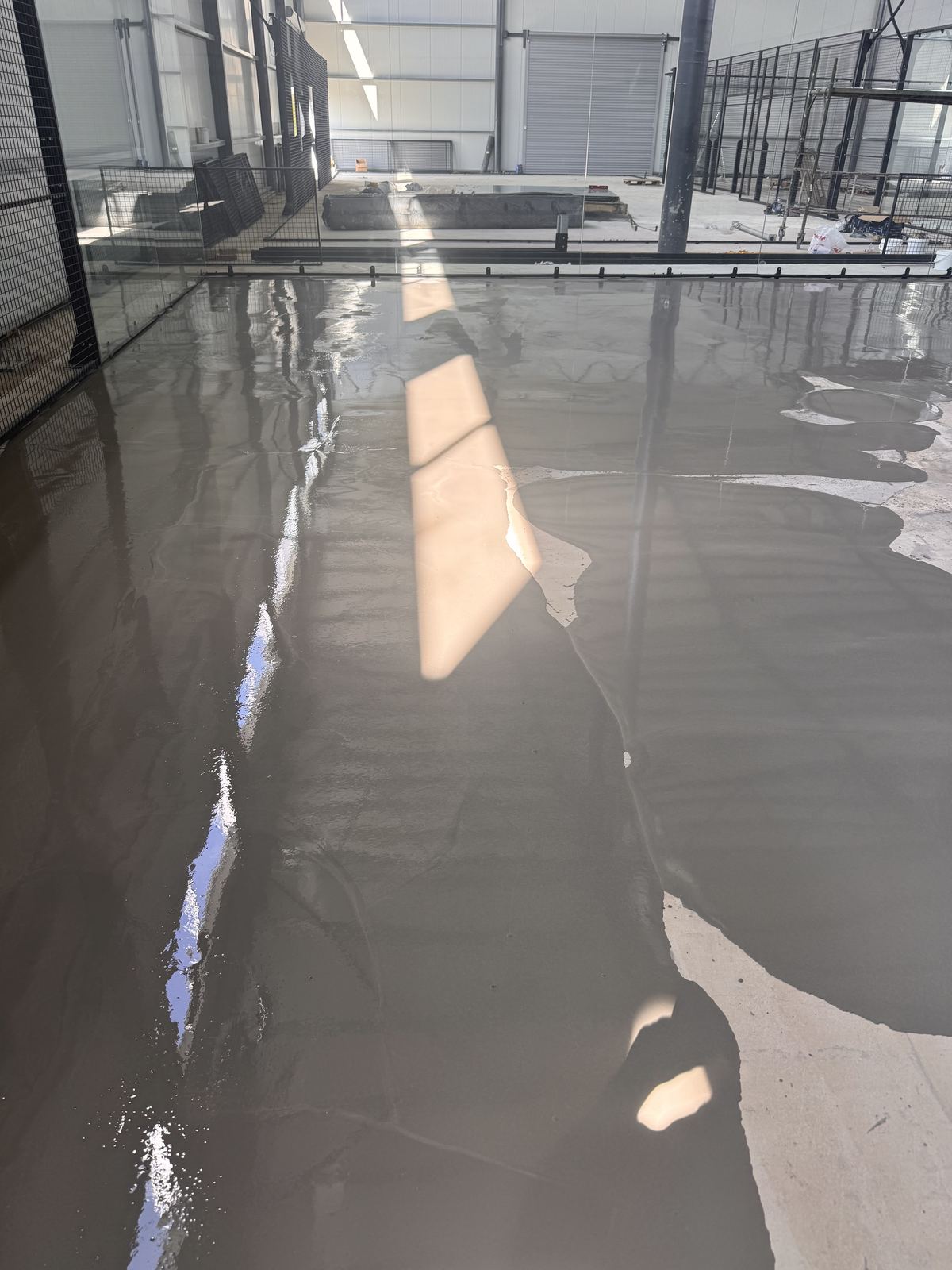
Most cracks in new screeds and slabs in Cyprus are decided in the first few hours, long before anyone walks on the floor. The cause is simple physics: the surface loses water to the air faster than the mix can replace it. The surface dries, shrinks and tears. Engineers call these plastic shrinkage cracks, and a hot, dry, windy afternoon is the perfect recipe for them.
For years the industry handled this with experience and a glance at the weather forecast. At CONCREX we decided to measure it instead. This article shows how our Curing Monitor works, what the graphs mean, and how they tell our crew exactly when to start fogging.
1. The number that matters: evaporation rate
Temperature alone does not tell you the risk. What matters is how fast water leaves the surface, the evaporation rate in kg of water per m² per hour. It depends on four things: air temperature, relative humidity, wind speed and the temperature of the concrete surface itself.
Our platform uses the same formula engineers use with the ACI 305 nomograph (the Menzel equation), calculated automatically for every reading:
Where Tc is the concrete surface temperature (°C), Ta the air temperature (°C), r the relative humidity as a fraction and V the wind speed (km/h). ACI 305 treats about 1.0 kg/m²/h as the level where precautions are needed. For screeds and self-levelling floors we usually set stricter limits, agreed per project.
2. How the CONCREX Curing Monitor works
- Sensors on site. A weather station at the pour records air temperature, relative humidity and, outdoors, wind speed. Indoor and outdoor sensors are tracked separately.
- Evaporation rate, live. Each reading is sent to the platform, which calculates the evaporation rate instantly. If we measure the surface temperature with an infrared thermometer, the risk recalculates on the spot.
- Two limits per project. Every pour has a caution limit and an upper limit. The dashboard shows at a glance where the pour stands.
- Action and report. The crew responds with fogging, windbreaks, shading or curing compound. At the end the client receives a PDF curing report for their records, engineer or warranty file.
Clients are not left guessing either. Each monitored project gets a private code, and the owner can open the same live dashboard from their phone.
3. Reading the graphs
This is the crack-risk graph from the platform, five days of a project in June with two sensors running:
Three things stand out:
- Indoors and outdoors are completely different jobs. The indoor sensor stays around 0.1 kg/m²/h. Outdoors, with sun and wind, the rate climbs to more than 0.6 kg/m²/h every afternoon.
- The risk has a daily rhythm. It peaks in the early afternoon and falls overnight. That tells us when to pour, and when protection must already be in place.
- The margin is smaller than it looks. A slightly hotter day, lower humidity or a stronger breeze pushes those peaks over the caution line. In July and August, or on a windy coastal site, this happens regularly.
4. Fogging: what it does and why it works
Fogging means spraying a very fine mist into the air above the fresh surface. The droplets are small enough to stay in the air and evaporate there. This raises the humidity right at the surface, so the concrete or screed loses far less water of its own.
Fogging is not the same as spraying the floor with a hose. Water on the surface can wash out the paste, weaken the top layer and spoil a self-levelling finish. Good fogging leaves the surface damp-looking, never flooded.
Using the same formula as our platform, here is what each measure does on a hot, dry, windy Cyprus afternoon (35 °C air, 25% humidity, 20 km/h wind, 38 °C surface):
The lesson is clear. No single measure is enough on a bad afternoon. Fogging alone still leaves the pour above the upper limit, and a windbreak alone only reaches the caution zone. Combined, fogging, windbreaks and shade bring the evaporation rate down to a safe level.
5. What we do when the graph climbs
| Dashboard status | What it means | What our crew does |
|---|---|---|
| Below caution | Normal curing conditions | Standard curing continues, readings keep coming in |
| Between caution and upper | Cracking risk is rising | Start fogging, put up windbreaks and shade, prepare curing compound |
| Above upper | High plastic shrinkage risk | Active fogging and every protection measure immediately; we reschedule the pour if it has not started |
Because the dashboard is live, we can react before the surface dries, not after the first cracks appear. We also use the history to plan: if a site shows high afternoon peaks, the next pour starts at dawn.
6. Why we built it
Cracks in a new floor are expensive to fix and difficult to argue about after the fact. With the Curing Monitor every pour has a record: the conditions, the risk level and the actions taken. It is the same engineering idea behind testing every mix. Data settles questions faster than opinions.
It also complements good practice on the day of the pour, which I describe in why new concrete cracks in the Cyprus summer: the right mix, no added water, correct joints and proper curing.
Live monitoring is available on CONCREX self-levelling and screed projects, and on request for other concrete pours. See how the Curing Monitor works or book a free site visit.
Frequently asked questions
What evaporation rate is too high for fresh concrete or screed?
ACI 305 guidance uses about 1.0 kg/m²/h as the point where precautions against plastic shrinkage cracking are needed, and many engineers act earlier for screeds, self-levelling floors and low water/cement mixes. On CONCREX projects each pour has its own caution and upper limit on the dashboard.
Is fogging the same as spraying water on the floor?
No. Fogging puts a fine mist into the air above the surface to raise the humidity. It should not leave water standing on the surface or wash out the paste, which spraying with a hose can do.
Can I follow my own project?
Yes. Monitored CONCREX projects get a private code. Enter it on the Curing Monitor page to open the live dashboard on your phone or computer, and you receive a PDF curing report at the end.
Have a project in mind?
Free site visit and written quote, island-wide.