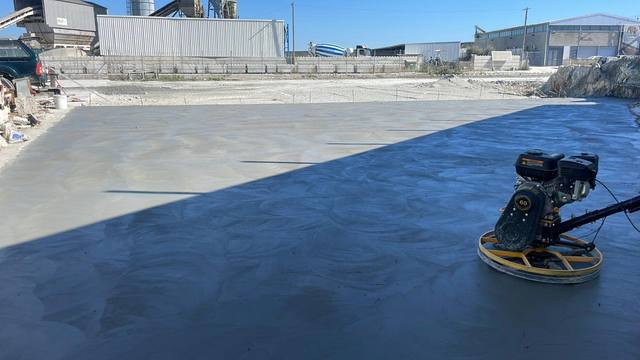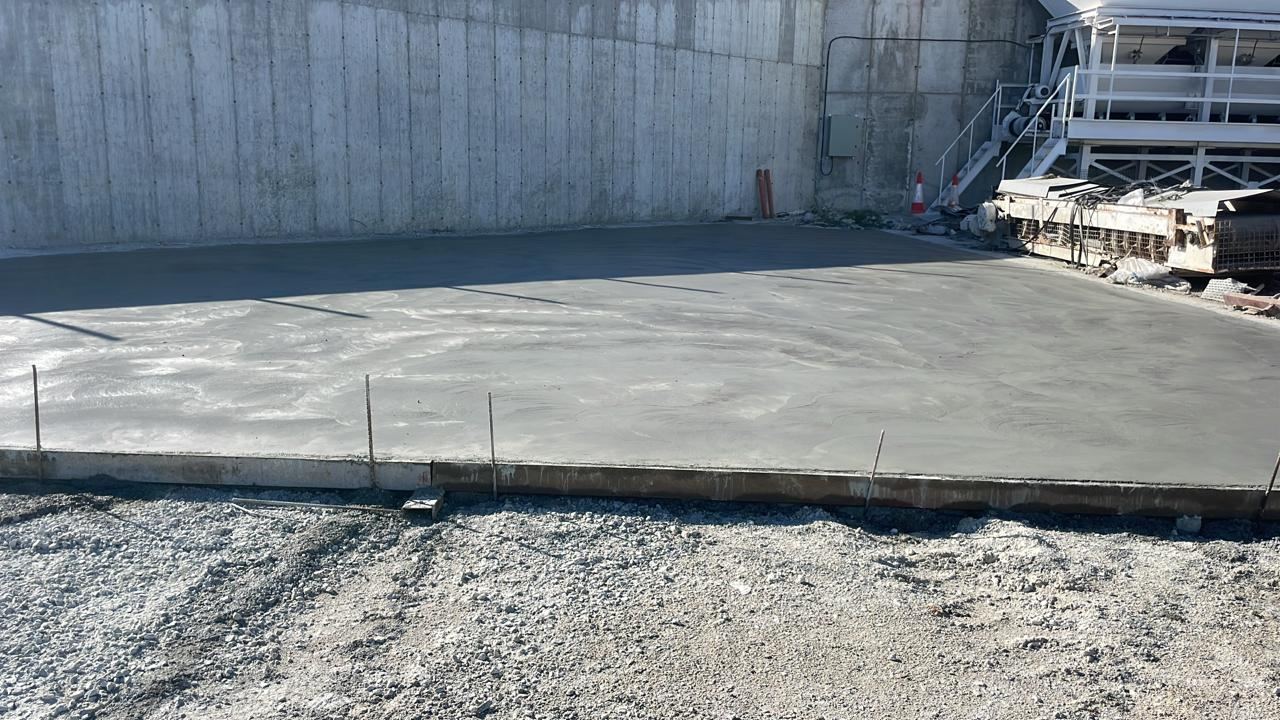
Every summer we see the same thing on Cyprus sites: a slab poured in the morning shows a network of fine cracks by the afternoon. The concrete was fine. The weather and the curing were not.
Three kinds of crack
1. Plastic shrinkage cracks (the first hours)
These appear while the concrete is still soft. Hot sun, low humidity and wind pull water from the surface faster than bleed water can replace it. The surface shrinks and tears into short, parallel or map-pattern cracks.
Risk is highest when air is hot and dry, the wind is blowing and the concrete itself is warm. Cyprus summer afternoons tick every box.
2. Drying shrinkage cracks (weeks to months)
Concrete loses water and shrinks slowly as it dries. If a slab is restrained and has no joints, it cracks to relieve the stress. These cracks are often straight and run across the slab.
Prevention: correct joint spacing, the right water content and proper curing.
3. Thermal cracks (large pours)
Thick elements heat up as cement hydrates. When the outside cools faster than the core, the temperature difference can crack the surface. This matters for foundations, thick walls and rafts.
Hot-weather rules we follow
- Pour early. Start at first light or in the evening.
- Keep the concrete cool. Shade aggregates, use cool water and plan deliveries so trucks do not wait in the sun.
- Dampen the base and formwork so they do not suck water from the mix.
- Never add water on site to restore workability. Use an admixture.
- Protect immediately. Windbreaks, sunshades, an evaporation retarder or a curing compound.
- Cure properly. Wet hessian, plastic sheeting or curing compound for several days. EN 13670 sets curing classes and durations.
- Cut joints on time. Saw-cut joints within the first day, before shrinkage cracks choose their own path.
When is a crack a problem?
| Crack | Usually means | Action |
|---|---|---|
| Fine map cracking on the surface | Plastic shrinkage | Seal if exposed to water |
| Straight crack across a slab | Drying shrinkage, missing joint | Monitor, seal, route if needed |
| Crack wider than about 0.3 mm, growing | Possible structural cause | Engineer's assessment |
| Crack with rust staining | Water reaching the steel | Repair before spalling starts |
The bottom line
Most cracking in new concrete is preventable with timing, cooling and curing. If you are planning a summer pour, talk to us before the trucks are booked.
Frequently asked questions
How long should concrete be cured in hot weather?
Keep it continuously moist or protected for at least several days, longer for slower-gaining cements. The required curing period depends on temperature and mix and is set out in EN 13670.
Are hairline cracks in a new slab a problem?
Fine plastic shrinkage cracks are usually shallow and cosmetic, but they let water in and should be assessed. Wider or growing cracks need an engineer.
Should I pour concrete at midday in August?
Avoid it. Pour early in the morning or in the evening, keep the concrete cool and start curing as soon as finishing allows.
Have a project in mind?
Free site visit and written quote, island-wide.